
THE ECONOMY WE COULD HAVE!
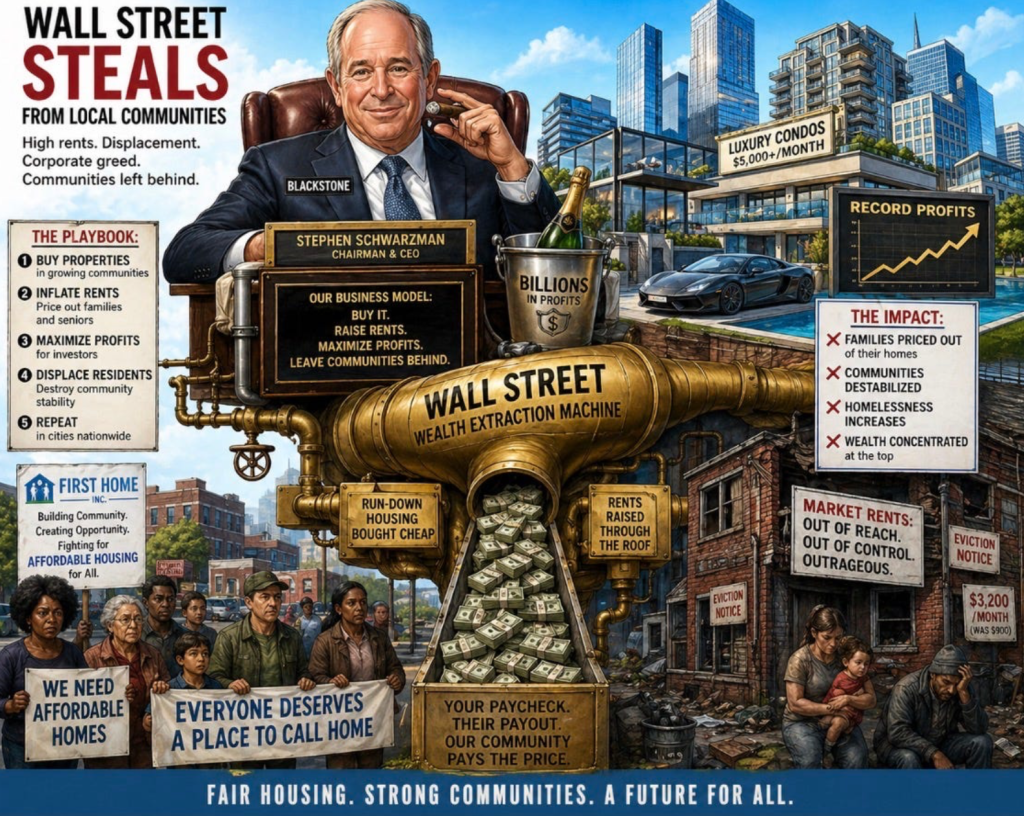
To make it simple and understandable for everyone — economies are people doing people things. The things that people do to provide food, shelter, transportation and other needed and wanted services for themselves and their neighbors. They are living, breathing things, because they are made up of living, breathing people and they can be healthy and alive, or sick and ailing. If economies are to be healthy, each of its components need to be healthy. There are also basically two ways to run an economy. In one, a community produces wealth and keeps it within the community. The farmer grows the food and sells it to the local grocer. The grocer banks at the local credit union. The hospital buys its linens from a laundry/company that also provides, makes, or sells linens three miles away. The construction crew lives in the houses it builds. The factory is owned, in whole or in part, by the people who work in it, so when it has a good year, they have a good year. Money circulates. It hits the same hands two, three, four, five times before it leaves town — and then usually only to go on a vacation. That circulation is what an economy actually is. In the other, wealth is produced locally and shipped out. A hedge fund in Manhattan buys six hundred thousand single-family homes in Phoenix, Charlotte, Atlanta, Las Vegas — houses that used to be how working families built net worth — and converts them into rental income that flows back to limited partners in New York, Miami, London, and the Gulf. Private equity buys the nursing home, the veterinary clinic, the trailer park, the newspaper, the hospital. It takes out huge amounts of debt to do it. It then fires as many workers as possible to cut costs to show an increased bottom line, reduces services, then pays themselves huge amounts in salary and bonuses, as well as unreasonable amounts in rents after they split the land the business sits on from the business itself, placing the land into an LLC that the executives/general partners own. They then charge the hospital ungodly rents that go directly into the executives’ pockets on top of their salary and bonuses, but its hidden from the less sophisticated who do not understand they are dealing with a bunch of common thieves. In other words, they steal the company blind, they rape it, until there is nothing left to steal and then walk away, leaving the community to deal with the consequences. The casinos on the Las Vegas Strip are owned by a real-estate trust headquartered two thousand miles away, and the rent the casino pays to operate on its own floor goes to that trust, not to anyone in Nevada. The locals get the jobs. The capital goes into the pockets of someone else far away. That second model is what most of America live inside of now. Blackstone is the largest commercial landlord (which includes residential ownership because homes are now considered “commerical assets”) in the United States. It also owns the land under the Cosmopolitan and the Bellagio and the buildings themselves. Vici Properties owns the land under Caesars Palace, MGM Grand, the Venetian, Mandalay Bay, and most of the rest of the Strip — and the buildings where a great deal of Las Vegas’s economy actually happens — and collects rent on every square foot. The dealers, housekeepers, cooks, and valets who make the city run see almost none of that rent. It leaves. It goes to shareholders who will never set foot in Clark County and don’t care whether the schools work or the water holds out. Call it what it is: An Extraction Economy. The town is the mine. The people are the worker bees. The wealth is the ore. And the shareholders are out of state. This is an economic model that always leads to one place only — DISASTER. It does not have to be this way, and the evidence that it doesn’t is not theoretical. It is sitting in plain sight in places that decided, deliberately, to do something else. Look at Catalonia. The region around Barcelona is the wealthiest part of Spain, and it has been wealthier than the Spanish average for more than a century, despite — and partly because of — a dense network of cooperatives, mutual societies, and family-owned firms that keep ownership local. Mondragón, in the Basque Country to the north, is the most famous example: a federation of worker-owned cooperatives employing roughly 70,000 people, where workers own the firm, elect the board, and share in the profits. When Mondragón does well, Mondragón’s workers do well, and the towns Mondragón sits in do well. The wealth doesn’t leave because there is nowhere else for it to go. The owners are already home. And as such, the owners have the “pride of ownership” and take care of everything. If there is a problem, they fix it immediately because its theirs, not someone else’s in a far away land. The business is maintained and operated properly by its owners which are made up of every employee there. Look at Emilia-Romagna in northern Italy, where a third of regional GDP runs through cooperatives and the region has spent decades among the most prosperous in Europe. Look at the Mittelstand in Germany — privately held, often family-owned mid-sized manufacturers rooted in specific towns, paying skilled wages, training apprentices, and reinvesting locally — which is the actual engine of German industrial strength. These are not folk experiments. They are the most successful regional economies in Europe, and they share a common feature: Ownership stays close to the work. Scotland just took the boldest step yet to make this the law of the land. And my maternal grandmother was a Stewart from Scotland, whose great aunt was a woman named Mary — Queen of Scots. In February 2026, the Scottish Parliament passed the Community Wealth Building (Scotland) Act — the