ELLSWORTH FOR PRESIDENT

Donate Now!

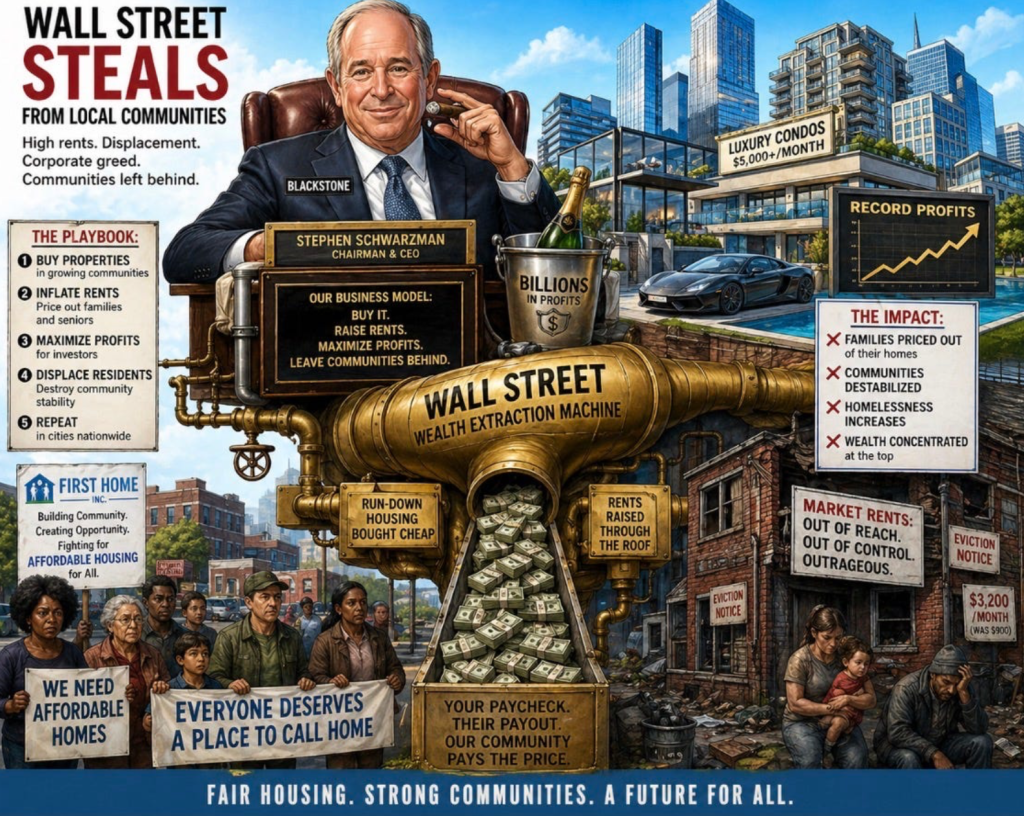
This campaign is powered by people who believe America should work for everyone—not just billionaires.

Articles

THE ECONOMY WE COULD HAVE!
Articles

THE ECONOMY WE COULD HAVE!

  To make it simple and understandable for everyone — economies are people doing people things. The things that people do to provide food, shelter, transportation and other needed and wanted services for themselves and their neighbors. They are living, breathing things, because they are made up of living, breathing people and they can be healthy and alive, or sick and ailing. If economies are to be healthy, each of its components need to be healthy. There are also basically two ways to run an economy. In one, a community produces wealth and keeps it within the community. The farmer grows the food and sells it to the local grocer. The grocer banks at the local credit union. The hospital buys its linens from a laundry/company that also provides, makes, or sells linens three miles away. The construction crew lives in the houses it builds. The factory is owned, in whole or in part, by the people who work in it, so when it has a good year, they have a good year. Money circulates. It hits the same hands two, three, four, five times before it leaves town — and then usually only to go on a vacation. That circulation is what an economy actually is. In the other, wealth is produced locally and shipped out. A hedge fund in Manhattan buys six hundred thousand single-family homes in Phoenix, Charlotte, Atlanta, Las Vegas — houses that used to be how working families built net worth — and converts them into rental income that flows back to limited partners in New York, Miami, London, and the Gulf. Private equity buys the nursing home, the veterinary clinic, the trailer park, the newspaper, the hospital. It takes out huge amounts of debt to do it. It then fires as many workers as possible to cut costs to show an increased bottom line, reduces services, then pays themselves huge amounts in salary and bonuses, as well as unreasonable amounts in rents after they split the land the business sits on from the business itself, placing the land into an LLC that the executives/general partners own. They then charge the hospital ungodly rents that go directly into the executives’ pockets on top of their salary and bonuses, but its hidden from the less sophisticated who do not understand they are dealing with a bunch of common thieves. In other words, they steal the company blind, they rape it, until there is nothing left to steal and then walk away, leaving the community to deal with the consequences. The casinos on the Las Vegas Strip are owned by a real-estate trust headquartered two thousand miles away, and the rent the casino pays to operate on its own floor goes to that trust, not to anyone in Nevada. The locals get the jobs. The capital goes into the pockets of someone else far away. That second model is what most of America live inside of now. Blackstone is the largest commercial landlord (which includes residential ownership because homes are now considered “commerical assets”) in the United States. It also owns the land under the Cosmopolitan and the Bellagio and the buildings themselves. Vici Properties owns the land under Caesars Palace, MGM Grand, the Venetian, Mandalay Bay, and most of the rest of the Strip — and the buildings where a great deal of Las Vegas’s economy actually happens — and collects rent on every square foot. The dealers, housekeepers, cooks, and valets who make the city run see almost none of that rent. It leaves. It goes to shareholders who will never set foot in Clark County and don’t care whether the schools work or the water holds out. Call it what it is: An Extraction Economy. The town is the mine. The people are the worker bees. The wealth is the ore. And the shareholders are out of state. This is an economic model that always leads to one place only — DISASTER. It does not have to be this way, and the evidence that it doesn’t is not theoretical. It is sitting in plain sight in places that decided, deliberately, to do something else. Look at Catalonia. The region around Barcelona is the wealthiest part of Spain, and it has been wealthier than the Spanish average for more than a century, despite — and partly because of — a dense network of cooperatives, mutual societies, and family-owned firms that keep ownership local. Mondragón, in the Basque Country to the north, is the most famous example: a federation of worker-owned cooperatives employing roughly 70,000 people, where workers own the firm, elect the board, and share in the profits. When Mondragón does well, Mondragón’s workers do well, and the towns Mondragón sits in do well. The wealth doesn’t leave because there is nowhere else for it to go. The owners are already home. And as such, the owners have the “pride of ownership” and take care of everything. If there is a problem, they fix it immediately because its theirs, not someone else’s in a far away land. The business is maintained and operated properly by its owners which are made up of every employee there. Look at Emilia-Romagna in northern Italy, where a third of regional GDP runs through cooperatives and the region has spent decades among the most prosperous in Europe. Look at the Mittelstand in Germany — privately held, often family-owned mid-sized manufacturers rooted in specific towns, paying skilled wages, training apprentices, and reinvesting locally — which is the actual engine of German industrial strength. These are not folk experiments. They are the most successful regional economies in Europe, and they share a common feature: Ownership stays close to the work. Scotland just took the boldest step yet to make this the law of the land. And my maternal grandmother was a Stewart from Scotland, whose great aunt was a woman named Mary — Queen of Scots. In February 2026, the Scottish Parliament passed the Community Wealth Building (Scotland) Act — the

Articles

15 COMMON-SENSE REFORMS THAT WOULD TRANSFORM AMERICA

We live in a country where billionaire tech CEOs are celebrated as “visionaries,” while teachers ~ one of the vertebrae in the backbone of our society ~ can’t afford rent. Where lifesaving EpiPens and basic inhalers can cost hundreds of dollars, while corporate tax loopholes drain trillions from public coffers. Where the “American Dream” has been purchased by Private Equity, gutted, shrink-wrapped, and sold back to us at prices tens of millions of people cannot afford to pay. The truth? Most of America’s biggest problems are not complex. They’re the predictable outcome of a system engineered to maximize profit for the uber wealthy at the direct expense of ordinary people. We live in an EXTRACTION economy. And despite what Silicon Valley moguls and Wall Street titans pretend, wealth does not equal wisdom ~ it simply means they’ve mastered a game rigged entirely in their favor. It’s like watching adults cheat at poker while they are playing against children who don’t know the rules ~ and then congratulating themselves for being “geniuses.” Below are fifteen unapologetically straightforward reforms that would materially improve life for hundreds of millions of Americans. 1. BREAK UP THE MONOPOLIES   When just a handful of corporations control entire sectors, competition dies and prices skyrocket. One of the most obvious and important places this can be seen is in our grocery stores. It seems almost weekly, prices go up on most things we purchase. And often not by just a little. Many times by as much as 10%-20% or more. The second is housing. Corporate ownership of housing has more than doubled rents and home prices over the past five to eight years in most major cities. By focusing on almost complete control of these two sectors as the uber-wealthy have done, they are attacking the very essence of what it means to be a human being living in a free and democratic society. Controlling food and housing in America has not happened by accident. It is part of a well-thought out plan to control the masses of humanity by the uber-wealthy. If you can control a human’s basic needs, you in essence control the person. The FTC under Lina Khan understood this. She was doing her job better than anyone else in Washington. One of the first things Trump did was remove her. Lina Khan needs to be reinstated to run the FTC, and real antitrust enforcement needs to be carried out immediately. Additionally, reinvigorating competition through wise and prudent regulation would create lower prices, more innovation, and a freer economy — not one chained to cartel-like corporate giants. 2. BAN CORPORATE OWNERSHIP OF HOUSING   Congress needs to enact H.R. 1745 and S. 788 immediately with amended versions to require the divestiture to occur within five years, not ten as they are written now. Wall Street firms are buying entire neighborhoods and converting homes into permanently monetized assets for rent. This should also include Student Housing. Blackstone is now the largest owner of Student Housing in the country. The purpose of such housing is to give students an affordable place to live while they are going to school, not to provide Blackstone an opportunity to make the lives of our children more costly so Steven Schwarzman can purchase another mansion in the Hamptons. Housing should exist for human beings as places they can call home. It should not be for hedge funds to pad their quarterly reports and profits. 3. IMPLEMENT A WELL-RUN, SINGLE-PAYER NATIONAL HEALTHCARE SYSTEM   Every major developed nation has figured this out but us. Healthcare is not a luxury item, yet our system treats it like one — enriching middle-man insurers, while patients in American have to make choices between buying their overpriced medicines, paying their rent, or declaring bankruptcy. A single-payer model wipes out waste, slashes administrative bloat, and centers care around people instead of profit-hungry parasites. The status quo is a moral failure. It is setup to enrich the C-Suites and Boards of a few greedy, uncaring corporations, which are monopolies, extracting all they can from sick, vulnerable human beings who need our collective assistance, not corporate abuse. How do we create the best healthcare system in the world? It’s easy. Ask other countries like Norway, Sweden, France, Canada, Mexico, etc. what they love about their systems and copy the good stuff. Ask them what they wish they had done differently and fix the weaknesses in their systems so we have the BEST HEALTHCARE SYSTEM IN THE WORLD. This is not rocket science. It is simply caring more for people than profits. 4. REFORM THE DEPARTMENT OF EDUCATION   Cap administrative salaries at $200,000 permanently with no future raises for anyone making $200,000 or more, (with rare exceptions TBD ~ such as the Superintendent or the CFO of school districts, but not more than $300,000) unless an individual were to do something absolutely extraordinary that benefits the entire system, then bonuses could be paid. No more 3% a year raises just because. Direct all savings toward teacher pay and other physical, tangible needs, i.e. school supplies, building maintenance, etc. We have built a bureaucratic skyscraper (an inverted pyramid) administered by an overpaid elite group, while the people actually teaching America’s children need to work two jobs to survive. This is backward, corrupt, and completely fixable. The same type of thinking needs to be incorporated into our city, county, state, and national governments. Pay them good salaries for good work, but do not allow them to abuse and misuse taxpayers (their neighbors) dollars. 5. TAX BILLIONAIRES AND LARGE CORPORATIONS APPROPRIATELY   A wise and prudent progressive tax system that might go as high as a 50% on billionaires and large multi-national corporations (and wise, prudent spending by the governement) and 30% on capital gains UNTIL OUR DEFICITS ARE REDUCED AND STABILIZED, is not radical — it’s rational. And we need to remove ALL of the loop holes that allow the uberwealthy to pay next to nothing. Extreme wealth is

Scroll to Top